Skip to main content
Bitcoin
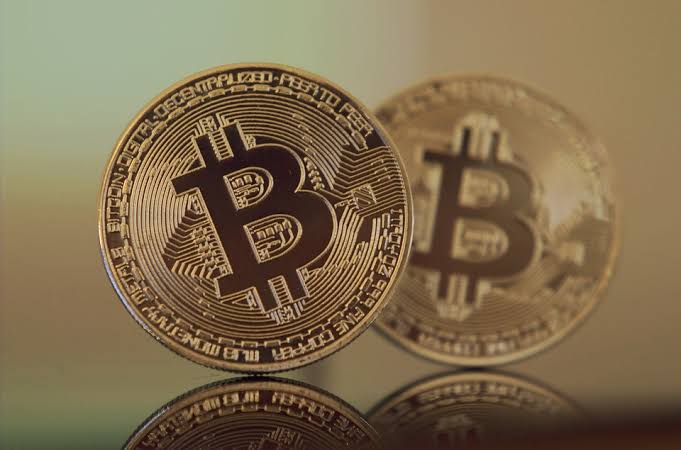
Bitcoin is a digital currency created in 2009. It follows the ideas set out in a white paper
by the mysterious Satoshi Nakamoto, whose true identity has yet to be
verified. Bitcoin offers the promise of lower transaction fees than
traditional online payment mechanisms and is operated by a decentralized
authority, unlike government-issued currencies. Today's market cap for
all bitcoin (abbreviated BTC or, less frequently, XBT) in circulation
exceeds $7 billion.
There are no physical bitcoins, only balances kept on a public ledger
in the cloud, that – along with all Bitcoin transactions – is verified
by a massive amount of computing power. Bitcoins are not issued or
backed by any banks or governments, nor are individual bitcoins valuable
as a commodity. Despite its not being legal tender, Bitcoin charts high on popularity, and has triggered the launch of other virtual currencies collectively referred to as Altcoins.
Bitcoin is one of the first digital currencies to use peer-to-peer
technology to facilitate instant payments. The independent individuals
and companies who own the governing computing power and participate in
the Bitcoin network, also known as "miners,"
are motivated by rewards (the release of new bitcoin) and transaction
fees paid in bitcoin. These miners can be thought of as the
decentralized authority enforcing the credibility of the Bitcoin
network. New bitcoin is being released to the miners at a fixed, but
periodically declining rate, such that the total supply of bitcoins
approaches 21 million. One bitcoin is divisible to eight decimal places
(100 millionth of one bitcoin), and this smallest unit is referred to as
a Satoshi. If necessary, and if the participating miners accept the
change, Bitcoin could eventually be made divisible to even more decimal
places.

- Aug. 18, 2008: The domain name bitcoin.org is registered.
Today, at least, this domain is "WhoisGuard Protected," meaning the
identity of the person who registered it is not public information.
- Oct. 31, 2008: Someone using the name
Satoshi Nakamoto makes an announcement on The Cryptography Mailing list
at metzdowd.com: "I've been working on a new electronic cash system
that's fully peer-to-peer, with no trusted third party. The paper is
available at http://www.bitcoin.org/bitcoin.pdf." This
link leads to the now-famous white paper published on bitcoin.org
entitled "Bitcoin: A Peer-to-Peer Electronic Cash System." This paper
would become the Magna Carta for how Bitcoin operates today.
- Jan. 3, 2009: The first Bitcoin block is
mined, Block 0. This is also known as the "genesis block" and contains
the text: "The Times 03/Jan/2009 Chancellor on brink of second bailout
for banks," perhaps as proof that the block was mined on or after that
date, and perhaps also as relevant political commentary.
- Jan. 8, 2009: The first version of the Bitcoin software is announced on The Cryptography Mailing list.
- Jan. 9, 2009: Block 1 is mined, and Bitcoin mining commences in earnest.
There are two primary motivations for keeping Bitcoin's inventor
keeping his or her or their identity secret. One is
privacy. As Bitcoin has gained in popularity – becoming something of a
worldwide phenomenon – Satoshi Nakamoto would likely garner a lot of
attention from the media and from governments.
The other reason is safety. Looking at 2009 alone, 32,489 blocks were
mined; at the then-reward rate of 50 BTC per block, the total payout in
2009 was 1,624,500 BTC, which at today’s prices is over $900 million.
One may conclude that only Satoshi and perhaps a few other people were
mining through 2009, and that they possess a majority of that $900
million worth of BTC. Someone in possession of that much BTC could
become a target of criminals, especially since bitcoins are less like
stocks and more like cash, where the private keys needed to authorize
spending could be printed out and literally kept under a mattress. While
it's likely the inventor of Bitcoin would take precautions to make any
extortion-induced transfers traceable, remaining anonymous is a good way
for Satoshi to limit exposure.
Comments
Post a Comment